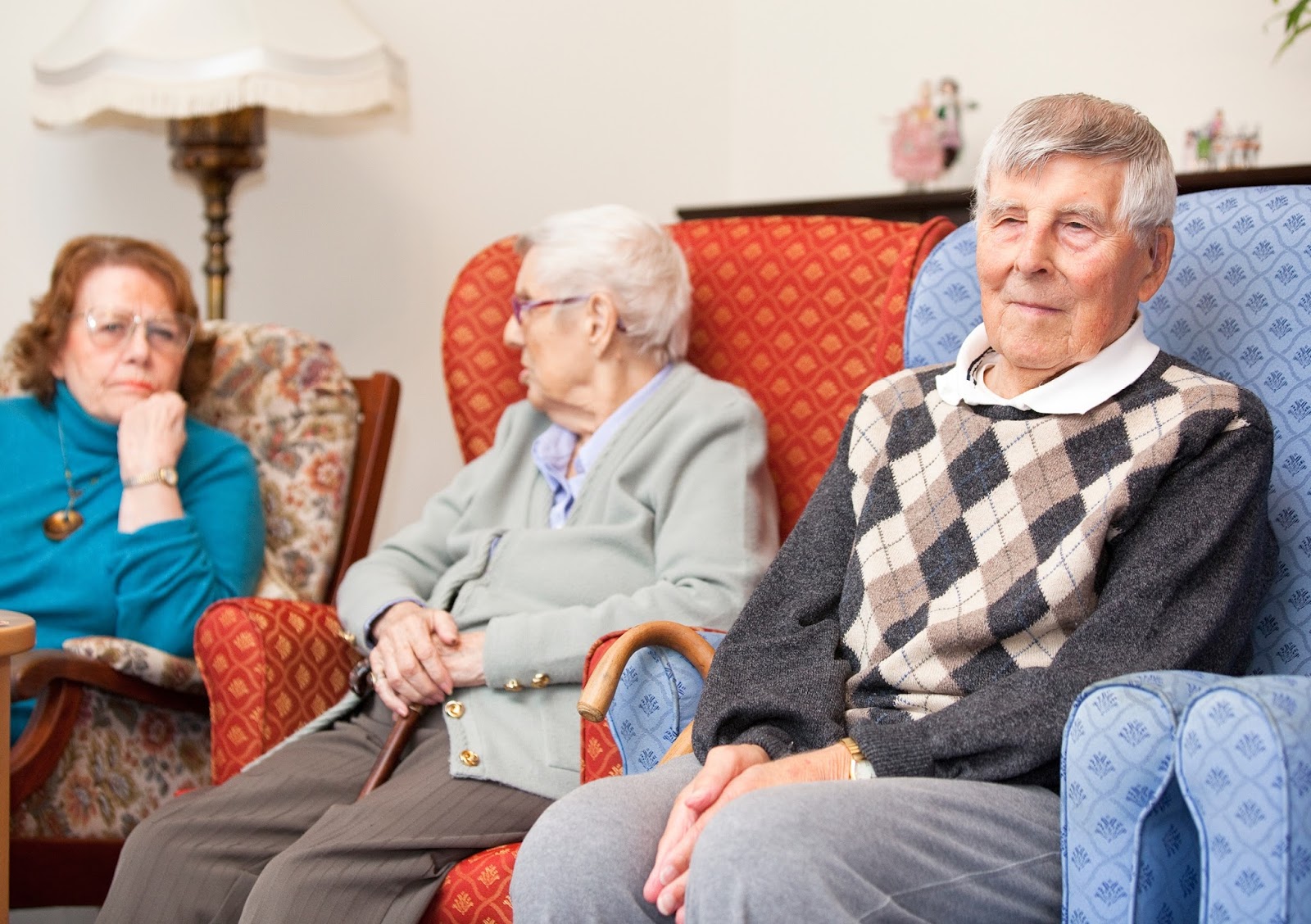
Showing posts with label activities. Show all posts

Wednesday, 1 May 2019

Clearing the fog of dementia with song

Music’s ability to trigger our deepest memories and emotions could help improve quality of life for people with dementia

Anyone who’s known a loved one with dementia can testify to its cruelty – the frustration, anger and sadness that comes from watching someone you love slip away.
Dementia, the umbrella term for conditions with a severe decline in mental function, can be an incredibly painful experience, marked by confusion, distress and a profound sense of loss. It’s also increasingly common. Dementia is now the second leading cause of death in Australia.

There is no cure, but researchers, including Professor Felicity Baker, co-director of the University of Melbourne’s National Music Therapy Research Unit, are looking for new ways to help people cope.
Professor Baker studies how music, especially singing and songwriting, can be used to treat people with a range of conditions – from young people with traumatic brain injuries to adults with substance abuse issues. She says music therapy can be a way for people living with dementia  and their carers – to deal with its symptoms.


 “We know that managing dementia with medication actually can make people more confused,” she says. “We need to be creative in finding ways that people with dementia can manage the challenges they face, and to address distressing symptoms such as agitation and depression.”
Professor Baker recently developed a songwriting program for people living with dementia and their carers at Caladenia, a care centre based in Melbourne’s eastern suburbs. Participants worked together in small groups to write and compose songs with a music therapist.

In one 10-week session, participants wrote seven songs. They sang about family, cruise ship holidays and staying out until the sun comes up. They thought about, talked about and even argued about songs they created, from the lyrics to the musical direction.
Even participants who normally struggle with conversation and interaction were able to work together on a music project.

“With music, they’re really engaged in a way that they’re not in other activities,” says Professor Baker. “They’re offering their ideas and perspectives. They’re happy to argue with each other about what they think the lyrics should be and whether the lyric fits the melody.”
But what really struck Professor Baker was that participants remembered the music they created.
“There’s this assumption that people with dementia can’t learn, that they’re just losing memories,” says Professor Baker. “But what we found is that they were actually remembering lyrics from week to week.”

Professor Baker’s findings will be used to inform her next project, a large-scale study funded by a grant from the National Health and Medical Research Council. She hopes to find out more about how collaborative music therapy, such as group music therapy or choir groups, might affect the cognitive function, depression, neurological symptoms and quality of life of people with the condition.

The project will include a major randomised control trial, comparing standard dementia care practices with three music-based interventions – group music therapy, larger choir groups and a combination of both.

There’s no doubt that music is a huge part of our lives. The simple act of listening to a song can evoke memories and emotions of heartbreak, love affairs, places or people in our past. And scientists, too, have long known that music has a powerful effect on brain function.
Unlike other stimulants, Professor Baker says, music engages all parts of our brain.
“When we engage in some activities, specific neural networks are activated. But when we listen to music, we actually engage quite a distributed network of neuronal activity.”
Professor Baker was struck by how residents at Caladenia Dementia Care could remember the lyrics they wrote to songs from week to week. Picture: Supplied
Studies have also shown that the act of creating music – songwriting, singing or playing an instrument – is more effective in stimulating our brain than just listening to music. In other words, it’s more stimulating to write and sing a song than listen to your favourite album.
“When we sing, we’re stimulating our auditory system, we’re stimulating our physical system,” she says. “When we use language in song, it’s tapping into our emotions and it’s tapping into physiological processes like our heart rate and our breathing.”

Since music is an emotional and physical stimulant, Professor Baker wants to see how much it can trigger memory function for people living with dementia.
“The theory is that pairing music and lyrics with an emotional experience can reach the threshold for memory,” she says. “It connects people and helps them to remember.”
A 2009 study by the University of California, Davis, for example, found that the area of the brain that holds our memories and links music to emotions is also the last part of the brain to atrophy during Alzheimer’s disease, the most common form of dementia.
Professor Baker’s research project is the Australian arm of a much larger study into the effects of music therapy on people living with dementia. Work in Australia will involve 500 participants, but academic colleagues in Norway are leading similar and even larger initiatives.
“It’s going to be the biggest music therapy study in dementia care ever and it’s certainly a game-changer for the dementia field,” she says.
Previous literary reviews about the effects of music therapy have been promising but inconclusive, citing the need for larger studies and more evidence.
“Worldwide, we have amassed a lot of small scale studies that show it’s effective but nothing big that will help us be taken more seriously when healthcare policies are being made.”

The NHMRC grant used to fund Professor Baker’s research is part of the Boosting Dementia Research Initiative, which gives $200 million to dementia research projects, including several other studies based at the University of Melbourne. Nearly 1 million Australians are expected to have dementia by 2050, and health policymakers are wondering how the system will deal with it.
“Dementia is going to be a challenge for this country,” says Professor Baker. “And they want to invest extra funding into projects that will help us with this massive problem that’s ahead of us.”


SOURCE: Kate Stanton, University of Melbourne

Saturday, 8 September 2018

Small steps could reduce dementia risk

Joining a book club or signing up to learn a new language may well give your brain the mental stimulation it needs to ward off dementia.

A new study has found that having to engage in such activities in later life can help protect against cognitive decline, which in turn may reduce the risk of someone developing dementia.
Everything from playing chess to pottering around the garden can prove beneficial, but learning new skills or launching yourself into a brand-new hobby is arguably the most effective way to get a mental workout.

The Engage Your Brain report said: “It is never too late to benefit from cognitively stimulating activities, and you can learn new things at any age.
“In the same way that you need to maintain exercise for physical strength, you need to participate in mental activities to support the health of your brain.”

However, the study is more sceptical about the relative benefits of the many “brain training” apps and computer games which have grown in popularity.
The suggestion is that while these programmes may well improve a specific skill, be it vocabulary or memory, there is less evidence that they boost overall performance.
By contrast, going to Spanish classes or learning to paint appears to pay dividends.
James Goodwin, chief scientist at the charity Age UK, said: “Many people think that all thinking skills decline with age, and we know there is certainly a lot of fear around this happening.


“But decline is not inevitable, and there are plenty of activities that we can start today that can provide benefits for brain health.
“If they are new to you and require your concentrated attention they may even be activities that you do regularly in your life, such as playing with grandchildren, gardening or playing cards.”

SOURCE: care@home
The overriding impression seems to be that any kind of stimulus that engage the brain and our imagination can bring only benefits in the long run. 

Thursday, 23 August 2018

Young and old come together to help dispel dementia myths

Schoolchildren visited residents at a care home as part of an inter-generational project aimed at dispelling the myths and stigma associated with dementia.

A class of 30 eight and nine-year-olds from St Peter and St Paul Primary School visited Hartismere Place care home in Eye, near Diss, as part of the Archie Project – an initiative set-up by the charity Reminiscence Learning and introduced by Care UK at the home.
The pupils took time throughout the afternoon to work with residents on arts and crafts projects and talk about what life had been like when those living at the care home were at school.
The afternoon concluded with the children performing an entertaining rap, which put a smile on everyone’s faces.
The Archie Project is a dementia awareness programme linking schools and care homes together.

It is centred round a brightly knitted scarecrow called Archie, which has been designed to help pupils understand how the condition can affect older people.
Customer relations manager at Hartismere Place, Angela Hodge, said: “The pupils and residents had a wonderful time getting to know each other and sharing stories.
“We believe it is important to learn about dementia from a young age and hope that this project will raise awareness of the condition for pupils, as well as their parents, teachers and the local community.

“We look forward to working with pupils at St Peter and St Paul Primary School on future projects and hope to build on the friendships which have been forged.”

SOURCE: Eastern Daily Press, Andrew Papworth
What a  great idea to promote awareness from such a young age about dementia related illness, particularly in their local community.

Monday, 11 December 2017

Chickens at Kapara aged-care home at Glenelg South helping residents with dementia

THE new residents of an aged care home in Glenelg South have quickly established themselves in the pecking order.

In a South Australian first, the ACH Group’s Kapara home has introduced HenPower, a program aimed at tackling social isolation and depression among people living with dementia.
Henny Penny, Chooky Looky, Chicken Licken and Priscilla have made themselves at home in Kapara’s memory support unit Rose Cottage since moving in two months ago.
The chooks appear to be relishing their role in the “creative ageing” program that mixes hen-keeping with arts activities and visits from local children for a weekly “intergenerational playgroup”.

The residents and kids make chicken-themed artworks together, while volunteers have also helped residents paint and knit pieces for the SALA festival.

Kapara senior manager Lyn Bertram says the residents love the chooks.
“For many of them, it brings back memories of their younger days, and they really enjoy handling them and petting them, feeding and looking after them,” she says.
“This program is about building relationships through hen-keeping and we are delighted by the positive outcomes it has already delivered.”
Resident Rhonda Fitzgerald, 92, says: “Aren’t they gorgeous? You just want to pick them up and cuddle them. The chickens have brought so much joy to us all.”
Charity Equal Arts launched HenPower in 2011 in the UK, where it is now used in more than 40 care homes.

HenPower manager Jos Forester-Melville says the program “gives people a role and responsibility with the hens” and is “a catalyst for building relationships and exploring creativity”.
“Bringing creativity into care is a fantastic way to engage people and aid communication, especially for those living with dementia,” she says.
The hens, coop and feed needed to establish the program at Kapara were donated by the PetStock business


SOURCE: Tim Williams, The Advertiser

Tuesday, 28 November 2017

Toddlers brighten up the lives of care home residents

In the sunlit front room of Hengrove Lodge residential care home, residents smile with delight as they see how many children are visiting today from the nearby Hengrove branch of Southern Links Children’s Center. 

Two-year-old Lexie-Jay makes a beeline for the home-made play-dough on the coffee table, and everyone becomes absorbed in every move the children make, many waiting in anticipation for a cuddle from their favourites.
Hannah Stopford is a community development worker at Bristol Aging Better, who are running this scheme in partnership with the children’s centre. “We wanted to do more integrational activities in the area,” she explains. “The main aim is to reduce social isolation but it’s also to set up projects that are going to last. We are working with the community to help them run these schemes and we’re also tapping into activities already going on within Bristol.
 “The visits to Hengrove Lodge run on a stay-and-play basis, so the parents bring the children along as they would in the children’s center, and we’ve set up the activities so the residents and children can enjoy them together.”

With many children’s toys brought along to the sessions, as well as art and craft activities, these stay-and-plays sessions last an hour and take place every other Wednesday.

 “Raising awareness of social isolation is key, but these visits are also having a big impact on the elderly who are suffering from dementia,” explains Lil Bowers, centre manager for Southern Links Children’s Centre. Around 850,000 people in the UK live with Alzheimer’s disease – the most common cause of dementia.
Lil says that, following a few visits, the children have started to mean a lot to the residents, who remember more and more about them each time and even ask for them by name. “It’s a real show of community spirit, and having these families visit Hengrove Lodge is vital to the work we do.”

Alex Evans carefully places her eight-month old son Charlie-Jay into the arms 95-year-old resident Dot Whittingham, who coos over him, a picture of happiness. “From the moment Dot’s cuddling Charlie-Jay, she alters,” comments Sue Hodge, deputy manager of Hengrove Lodge. “It’s an indescribable feeling watching one of our oldest residents light up with joy from cradling a child. She just loves to see him and for us that’s a wonderful thing to be a part of.”
As the session draws to a close, Josh Stanford helps his two-year-old son take off his brightly-coloured crocodile suit. “This kind of thing should definitely happen more often,” he says. “It’s a brilliant idea and it makes a lot of sense. I don’t see why this kind of amalgamation couldn’t be developed further across the city. All the residents love it and it’s good all round for everyone involved.”


SOURCE: Bristol247.com, Lily Newton Browne

Thursday, 23 November 2017

The truth about who really picks up the tab for care home provision

Your article (Soaring care home costs mean you now pay £34,000 a year, 18 November) fails to give an accurate account of the financial obligations of self-funders. This happens all too often across the media. 

Local authorities do not “pick up the tab” when a person’s assets fall to £23,250. In fact, LAs continue to take £1 per £250 on a sliding scale until a person’s assets reach £14,250. At this point a care home resident is allowed to hold on to the remaining sum. However, their contributions do not end there as a council will claw back any pensions, state or private, while also expecting families to pay top-up fees. 

My mother has severe dementia and has been in a nursing home for over four years and has paid over £250,000, having been compelled to sell her two-bedroom flat and use her savings.

One of the major problems is the privatisation of care homes as there is no limit to what they can charge a self-funder when demand is so high. This inevitably means that a person’s resources diminish quickly and then the LA has to step in.
 A few years ago I became aware of newspaper advertisements around the world encouraginge people to invest in UK care homes as they’d be assured of a 8% return on their stake. 
Yes, there is a compelling need for a concrete plan on the future of social care, but it must re-examine the whole structure on which provision is founded. Our elderly must not be treated as mere commodities but with the dignity and fairness they deserve.


SOURCE:The Guardian, Diane Wall

Tuesday, 7 November 2017

'Dishy' Harry Styles visits care home to play bingo

Harry Styles, the former One Direction singer, chaired a game of bingo at a Warrington care home yesterday, and while there seemed to be initial confusion as to who he was, he won the residents over along the way.

As part of a BBC special with pal Nick Grimshaw, the 23-year-old spent half-a-day at St Oswald's House, and made quite an impression on the residents, with one lady saying “I thought he was rather dishy” and another commenting, “that lad made a big difference to me today.”
Ria Percival, home manager, said: "It was a bit chaotic, but it was a great experience for all the residents and staff that took part. They thoroughly enjoyed the day and Harry and Nick's company.”

As Harry walked into the room to an introduction from the home’s activities co-ordinator, he was met with a loud ‘Who are you?’ He then showcased the bingo prizes, which ranged from handkerchiefs to boxes of chocolates, and a copy of his debut album.
A spokeswoman from the home added: “The residents and team from brighterkind’s St Oswalds House Care Home in Warrington had a wonderful afternoon playing bingo and doing armchair exercise with Harry and Nick. The residents described them both as ‘very nice boys’ and hadn’t a clue who they were. It just goes to show that it’s nice to be important but more important to be nice!
 “Our residents were keen to be involved and thoroughly enjoyed watching the programme when it aired on 2 November. The residents and team organised an ‘Oscar’ evening to watch and celebrate their part in the programme. They went to bed smiling and giggling after seeing the piece about St Oswalds.”

‘Harry Styles At The BBC’ is a one-off special that shows the star performing a number of tracks from his debut self-titled solo album.
In addition to performing, Harry also sits down with host Nick Grimshaw and talks about his career and life to date, being a solo artist and the start of his acting career. The hour-long show aired on BBC One on 2 November.

SOURCE: carehome.co.uk, Melissa McAlees

Wednesday, 25 October 2017

Children at Iceni Academy light up the lives of care home residents at Stanway Green Lodge

The pupils from Iceni Academy in Colchester, who regularly visit residents at Stanway Green Lodge, took part in an arts and crafts session in time for Diwali - the festival of light.
They joined the elderly residents in making candle holders out of old CDs and decorating them.

Pupils visit the care home twice a month to build relationships with the residents.
Aniket Kanitkar, manager at the care home, said: “As the children have had contact with the elderly they just bound into the room.
“They have been coming here for about a year now, it works really well.
“They come in once a month with the vicar at All Saints Church too.”
Lou Cotter, community cohesion lead at the school, said it was a fantastic opportunity for the children to help in the community.
She said: “They have been taking along their maths and English books and discussing their learning with the ladies and gentlemen. The children benefit hugely.”


SOURCE: Essex County Standard, Katherine Palmer

Tuesday, 12 September 2017

These seven steps will keep your brain healthy from childhood to old age, say researchers

LIVING A HEALTHY lifestyle could help your brain as much as the rest of your body, according to a new advisory from the American Heart Association (AHA).
Taking care of our bodies in the right way could also lessen the risk of cognitive decline – which can lead to diseases such as Alzheimer’s and dementia – in later years, researchers said.

Vascular neurologist Philip Gorelick said: “Research summarised in this advisory convincingly demonstrates that the same risk factors that cause atherosclerosis [a hardening of the arteries that can cause stroke or heart attack], are also major contributors to late-life cognitive impairment and Alzheimer’s disease.”
In order to ensure that our brain stays healthy into old age, the AHA recommends following its Life’s Simple 7. This is a set of health factors designed to make our bodies, particularly our heart, in good condition throughout our lives.
They are:
·         Manage blood pressure
·         Control cholesterol
·         Keep blood sugar normal
·         Get physically active
·         Eat a healthy diet
·         Lose extra weight
·         Don’t start smoking or quit
And what exactly is a healthy brain? The researchers define it as “one that can pay attention, recognise information from our senses, learn and remember, communicate, solve problems and make decisions, support mobility and regulate emotions”.

Previously, experts had not linked the problems that cause Alzheimer’s with stroke but now believe that they are related.
Gorelick said that elevations of blood pressure, cholesterol and blood sugar can cause impairment of large and smaller blood vessels, “launching a cascade of complications that reduce brain blood flow”.

Gorelick said: “At some point in our lives, a ‘switch’ may be getting ready to ‘flip’, or activate, that sets us in a future direction whereby we become at-risk for cognitive impairment and dementia.”
In Ireland, over 50,000 people live with some form of dementia. According to research from NUI Galway, that number could more than double to 132,000 by 2041.
According to the government’s national dementia strategy, the average annual cost of care per person with dementia in Ireland is €40,500.
It added: “The value of informal care for those with dementia is estimated to be €807 million per annum.”
The American researchers hope that their advisory will help to inform how doctors and physicians treat brain health by linking it to these important lifestyle factors. They added that it could also be a starting point to build a broader definition of brain health.
Gorelick said that monitoring rates of dementia in places where public health efforts are improving the health of people’s heart “could provide important information about the success of such an approach and the future need for healthcare resources for the elderly”.

SOURCE: The Journal

Definitely worth bearing these points in mind, not just in relation to dementia but in our general health and well being longterm.

Tuesday, 15 August 2017

One social hour a week in dementia care improves lives and saves money

Person-centred activities combined with just one hour a week of social interaction can improve quality of life and reduce agitation for people with dementia living in care homes, while saving money.

These are the findings from a large-scale trial led by the University of Exeter, King's College London and Oxford Health NHS Foundation Trust. These results were presented today (July 16) at the Alzheimer's Association International Conference 2017 (AAIC). The research was funded by the National Institute for Health Research (NIHR).

The trial involved more than 800 people with dementia across 69 care homes in South London, North London and Buckinghamshire. Two 'care staff champions' at each home were trained over four day-long sessions, to take simple measures that such as involve talking to residents about their interests and decisions around their own care. When combined with just one hour a week of social interaction, it improved quality of life and reduced agitation.

Importantly, the approach also saved money compared to standard care. Researchers say the next key challenge is to roll the programme to the 28,000 care homes in the UK to benefit the lives of the 300,000 people with dementia living in these facilities.
Professor Clive Ballard, of the University of Exeter Medical School, who led the research, said: "People with dementia who are living in care homes are among the most vulnerable in our society. Incredibly, of 170 carer training manuals available on the market, only four are based on evidence that they really work. Our outcomes show that good staff training and just one hour a week of social interaction significantly improves quality of life for a group of people who can often be forgotten by society."

Dr Jane Fossey from the Oxford Health NHS Foundation Trust, said: "Taking a person-centred approach is about really getting to know the resident as an individual—knowing their interests and talking with them while you provide all aspects of care. It can make a massive difference to the person themselves and their carers. We've shown that this approach significantly improves lives, reduces agitation and actually saves money too. This training must now be rolled out nationwide so other people can benefit."
Doug Brown, Director of Research for Alzheimer's Society, said:
"70% of people living in care homes have dementia, so it is vital that staff have the right training to provide good quality dementia care.

"We know that a person-centred approach that takes each individual's unique qualities, abilities, interests, preferences and needs into account can improve care. This study shows that training to provide this type of individualised care, along with activities and social interactions, has a significant impact on the well-being of people living with dementia in care homes. It also shows that effective care can reduce costs, which the stretched social care system desperately needs.
"Alzheimer's Society is committed to improving dementia care through research. We want to see interventions like this put into practice, and will continue to fund further research to improve the quality of life for people with dementia in their own homes, care homes and hospitals. But investment in research alone cannot rescue the broken system. The government must use the consultation on social care reform to deliver a long-term solution that addresses the desperate funding crisis in our current system and shares the cost of care across society."

The results are the findings of the Improving Wellbeing and Health for People with Dementia (WHELD) trial, the largest non-pharmacological randomised control trial in people with dementia living in care homes to date.

SOURCE: Medical Xpress, University of Exeter

Social interaction and communication... seems that this approach should be everyday and common place rather than a task. When did we stop talking to each other? Asking how our day is going or even just a friendly hello isnt a lot to ask and is often the starting point for something much more meaningful.